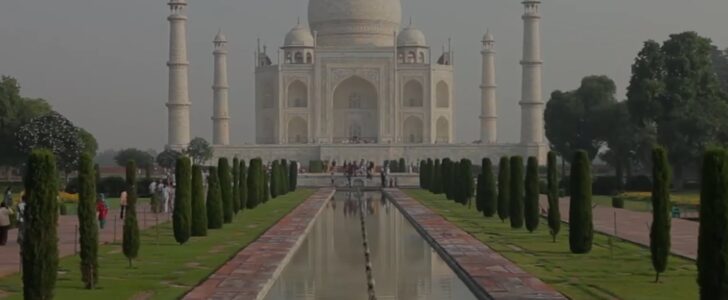
Uzbekistan lies in the heart of Central Asia. It is a land of breathtaking ancient cities, golden deserts and a people caught between a glorious past and an uncertain future. With a population of approximately 36 million people, Uzbekistan is Central Asia’s most populous nation.
Unlike its nomadic neighbors, Uzbekistan’s roots are deeply agrarian, as evidenced by its large settled population, intricate architecture, and vast agricultural output. The country is blessed with abundant natural resources like cotton, gold, natural gas, and rich farmland, making it a regional powerhouse. Under this economic potential lies profound corruption, authoritarianism, and a government that tightly controls every aspect of public life, including religion.
Over 83% of Uzbekistan’s population identifi es as Sunni Muslim, considered among the most devout Muslims in Central Asia. Islam arrived in this region over a thousand years ago, transforming it into a center of Islamic learning and culture making Christianity a serious minority in the country.
Today, religious freedom remains a cruel fi ction in Uzbekistan. Unregistered religious activity is criminalized. Even registered churches must seek government approval for any activity outside formal worship services and for all materials they publish.
Converts from Islam face the most devastating persecution, ostracized by families, blackmailed by Islamic leaders, prevented from burying loved ones in state cemeteries, and sometimes beaten or imprisoned. New believers are often isolated, living in fear, yet they testify to an overwhelming joy in discovering the depth and richness of the Bible. House churches are multiplying quietly, believers are being trained and equipped, and the gospel is spreading through one conversation, one family, one village at a time.
In this season of Ramadan, we know God sees Uzbekistan not as a closed country, but as a harvest fi eld where the seeds of the gospel are taking root and bringing forth fruit that will last for eternity.
Archives
Bangladesh
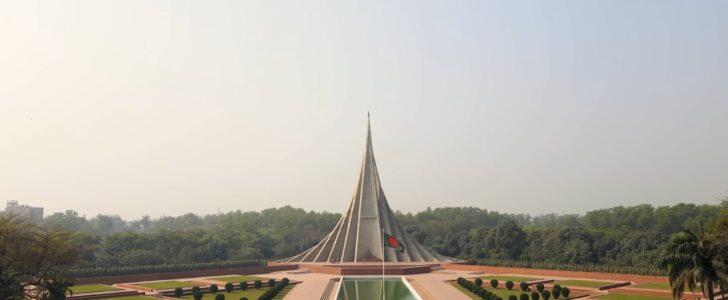
Bangladesh is a nation nestled in the northeastern corner of South Asia. It is encased in a land where ancient cultural richness coexists with desperate poverty and where the human spirit endures against odds that would break lesser nations. Crisscrossed by hundreds of rivers, this low-lying delta nation is one of the most densely populated countries in the world.
Each year, the monsoon rains that sustain the nation’s agricultural heartland also become its greatest enemy, flooding over one-third of the country and devastating communities that have barely recovered from the last disaster.
This constant battle with nature has forced most Bangladeshis to live on less than one dollar a day, driving children into labour and girls into early marriages, while multitudes migrate to overcrowded cities to work in garment factories with dangerously poor safety standards.
In 2024, Bangladesh was shaken by a political earthquake. Across the nation, student protests over government corruption and a controversial quota system which erupted into mass demonstrations that swept across all regions. The government’s brutal response of killing hundreds, possibly thousands of protesters only intensified the uprising.
Prime Minister Sheikh Hasina fled the country and an interim government was formed, led by Nobel Peace Prize laureate Muhammad Yunus. Yet the power vacuum left in the wake of this upheaval created fertile ground for extremists.
Over 90% of Bangladesh’s population is Muslim, and in many ways, Islam is not merely a religion, it is a cultural identity, a community belonging, and social survival wrapped into one. The cost of following Jesus in Bangladesh is enormous. Christians can be beaten, imprisoned, and killed for their faith. Converts from Islam face the most devastating form of persecution which is rejection by family and displacement.
In their workplaces, Christian employees face harassment, discrimination, and professional sabotage from Muslim colleagues while Christian women face particular vulnerability, including sexual violence and forced displacement during periods of political unrest.
And yet, amid all this, God is at work. The Christian population, though just 1%, is growing, particularly among low-caste Hindus and formerly unreached tribal communities. Bangladeshi churches have made a powerful witness through relief work during floods and political crises, practically demonstrating the love of Christ in ways that are opening hearts.
Solar-powered audio Bibles are being distributed to communities where illiteracy makes traditional outreach impossible and indigenous Bengali believers are the primary carriers of the gospel, trained and mobilised to reach their own people in culturally sensitive and courageous ways.In this season of Ramadan, we believe that God is not finished with this nation. Many who have never heard the name of Jesus will receive light, dreams and visions.
Somalia
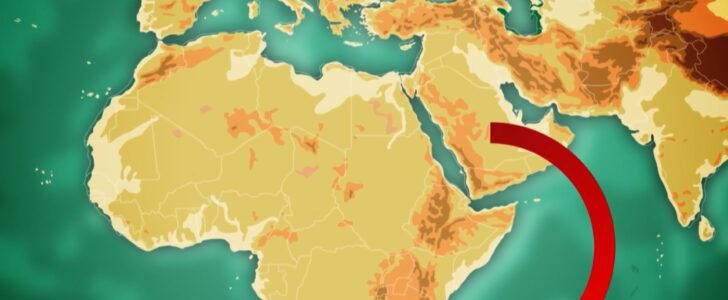
Somalia sits at the Horn of Africa where the Indian Ocean meets the Gulf of Aden, with the longest mainland coastline on the continent. Home to roughly 20 million people and one of the youngest populations in the world, Somalia is also among Africa’s most ethnically homogeneous nations. Over 85% of its people belong to five major patrilineal clans that shape identity, land ownership, and political life—structures that both hold society together and have fueled devastating conflict.
Since the collapse of the central government in 1991, Somalia has endured decades of civil war, famine, and political instability. Millions remain internally displaced, and the country faces recurring humanitarian crises marked by drought, economic collapse, and fragile health systems. Life expectancy hovers around 50 years, infant mortality is among the highest globally, and a severe shortage of medical professionals leaves mothers and children especially vulnerable.
Amid this instability, the militant Islamist group Al-Shabaab continues to exploit weak governance and insecurity, controlling territory and enforcing violent rule. Its presence deepens fear and suffering, particularly in regions where basic services and protection are absent. This climate of extremism has made daily life perilous for ordinary Somalis and has crushed hopes for lasting peace.
Within this harsh reality, Somalia’s tiny Christian community stands as one of the most persecuted in the world. The country ranks near the very top of Open Doors’ World Watch List, as conversion from Islam—Somalia’s official religion—is punishable by death. Known underground believers, numbering in the thousands, live in absolute secrecy. Men risk forced conscription into militant groups, while women face forced marriages, violence, and displacement simply for their faith.
Yet even here, God is at work. Quietly and courageously, underground leaders are emerging, and acts of compassion—often through medical care—are opening doors to the gospel among women and children in unreached areas. Though public church life is impossible and most people groups still lack access to the gospel, the Church of Jesus Christ is alive behind closed doors. This Ramadan, we believe God sees Somalia—the cries of its children and the faith of its hidden saints—and that the gates of hell will not prevail.
Uyghur
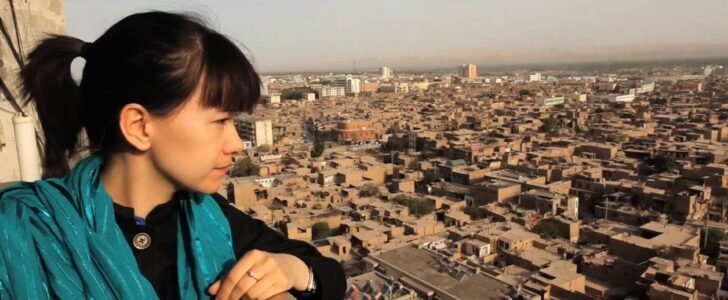
In the far northwestern reaches of China lies the Xinjiang Uyghur Autonomous Region, a vast land of deserts, mountains, and ancient trade routes. For the Uyghur people, this land is known as East Turkestan—a name that carries memory, identity, and belonging. For centuries, Uyghurs have lived here as a distinct Turkic-speaking, predominantly Muslim people, shaped by community, art, music, and faith. But since the region was absorbed into modern China, that identity has been steadily pressured, renamed, and controlled.
Today, the burden on the Uyghur people is immense. Under the rule of the Chinese Communist Party, everyday life has become saturated with fear and surveillance. Families are watched, faith is criminalized, and cultural expression is treated as a threat. Many Uyghurs have been detained, separated from loved ones, or silenced simply for practicing their religion or preserving their traditions. Even beyond China’s borders, Uyghur families live with anxiety, knowing that distance does not always mean safety.
Yet even here, God is not absent. In the shadows of repression, there are Uyghurs quietly searching for truth, dignity, and a God who sees their suffering. Among them are a small number of Uyghur followers of Jesus—believers who live doubly vulnerable lives, rejected by the state and misunderstood by their own community. With little access to pastors, Scripture, or fellowship, they cling to Christ in secret. Digital Scriptures, satellite broadcasts, and whispered prayers have become lifelines. Their faith, costly and unseen, shines with quiet courage.
Indonesia
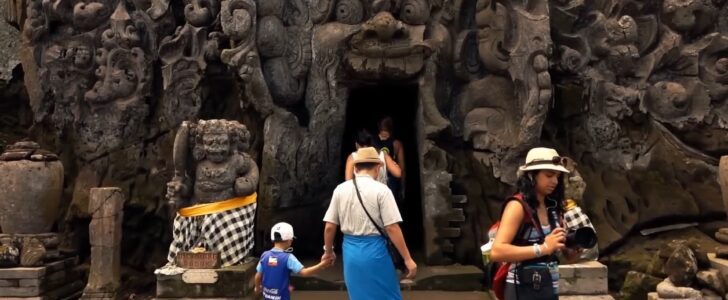
Indonesia stretches across a staggering archipelago of islands, from the Indian Ocean to the Pacific, a nation of immense beauty and deep spiritual complexity. Its people live among rainforests, volcanoes, coral reefs, and ancient kingdoms. Yet many remain spiritually isolated, tucked away in remote communities where the good news has barely been heard.
Though Islam shapes the life and identity of much of the country, Christianity has taken root in pockets across the islands, and God is at work in ways that give us reason to hope. The scale of the task is sobering. Vast distances, remote terrains and communities tied to long-standing religious traditions make access difficult.
Those who follow Christ often face social pressure, family rejection, and sometimes violence. At the same time, there are signs of movement, outreach efforts into previously untouched people groups, indigenous believers rising up as pioneers, and small communities multiplying in places where once there was almost no Christian witness. Yet many churches still lack systematic discipleship, and without strong teaching, syncretism and shallow faith can weaken the church’s witness.
Our burden is twofold, to press into unreached places with creativity and sacrifice, and to strengthen the discipleship and leadership of local churches so new believers are grounded in Scripture. We can celebrate the workers who ride motorbikes into jungle interiors, the audio scriptures bringing God’s Word to those who cannot read, and indigenous missionaries who leave comfort behind to serve their own people. At the same time, we must prayerfully support pastors and teachers equipping congregations to stand firm in Christ amid rising pressures and tightening restrictions in some regions.
God is Lord over every island and every nation. He cares for the isolated, the poor, and the spiritually hungry among the fast-moving peoples. Let us join together now as many are fasting and seeking God’s face that He reveal Himself to them.
Tehran
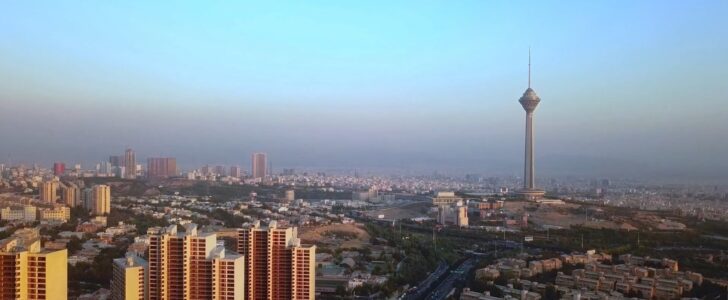
Tehran rises at the foot of the Alborz Mountains, where snow-capped peaks overlook a city alive with tension and beauty, memory and longing. As Iran’s capital and cultural heart, Tehran is home primarily to Urban Persian, Farsi-speaking peoples—poets and engineers, students and scholars, mothers and taxi drivers, many carrying questions they are no longer afraid to ask. It is a city where ancient Persian identity collides with modern unrest, and where faith is both restricted by law and pursued with quiet determination. Here, following Jesus is illegal—and yet it is happening.
Before the 1979 Islamic Revolution, Tehran reflected a nation opening to the world. That moment was abruptly reshaped by a theocratic system that now governs every sphere of life, from public expression to private belief. Decades of economic strain, corruption, and international isolation have weighed heavily on the people. Protests, especially in recent years, have revealed not only political frustration but a deeper spiritual disillusionment. A generation raised under religious control is questioning enforced faith and searching for truth that brings life rather than fear.
Out of this burden, hope is quietly rising. Among the Urban Persian peoples of Tehran, a remarkable movement is unfolding beneath the surface. In apartments and living rooms, small groups gather—curtains drawn, voices low, hearts open. Underground believers worship, share communion, and study Scripture with a hunger sharpened by risk. Many come to Jesus through dreams, testimonies, and encounters with His love that no surveillance system can trace. Even as pressure increases, the church continues to grow, marked not by buildings, but by transformed lives.
This season of Ramadan is a sacred moment. While the city turns toward prayer in one direction, the Spirit of God is moving in another—softening hearts, strengthening believers, and opening doors no authority can shut. Where the gospel is meant to be silenced, it is being amplified. Where prisons are meant to end stories, God is turning them into testimonies. Tehran, among the Urban Persian peoples, is becoming a place of profound spiritual awakening.
Persia
Persia the first true superpower, stretching from the Balkans to the Indus Valley. It was known for its efficient administration, cultural tolerance, and vast infrastructure, The area now widely known in the West as Persia (Iran). This name came from Persia Fars, a region in southwestern Iran and the core of ancient Persian empires. A land of ancient grandeur and deep spiritual history.
Stretching from the Caspian Sea to the Persian Gulf, its mountains, deserts and bustling cities reflect a people shaped by poetry, perseverance and faith. Positioned at the crossroads of the Middle East and Central Asia, carring both cultural influence and heavy global pressure.
Spiritually, Islam spread to the Persian Empire (modern-day Iran) during the 7th-century Islamic conquests – Over time, Islam became the dominant religion, blending with Persian culture. By the 9th century, Islam was firmly established. mainly Shia Islam sect, which deeply influences governance and public life. Within this environment lived historic Christian communities, such as Armenian and Assyrian believers, alongside a growing number of converts who follow Jesus in secret.
For these believers, faith often comes at great cost. House churches are forced underground. Worship happens quietly.
Many face interrogation, imprisonment or worse, simply for choosing Christ. Yet despite the pressure, the church in the area and the surrounding countries are not shrinking. It is persevering.
Beyond the visible church are many people who have never truly encountered the gospel. Entire communities remain unreached, with little or no access to scripture or Christian witness. Conversion from Islam carries severe consequences, and Bible distribution is restricted.
Still, spiritual hunger is rising. Disillusionment with political and religious systems has opened hearts to following many spiritual paths from Zorastranizim, Mysticism and many other man made teachings . Across the nation, from Iran, afghanistan, uzbekistan and tajikistan, Pakistan, stories emerge of seekers encountering Jesus through dreams, quiet conversations, satellite broadcasts and online ministries that slip past censorship.
The younger generation, burdened by economic uncertainty and limited freedoms, is increasingly open to spiritual truth. In the midst of darkness, God is at work building His church quietly, faithfully and powerfully. This is a critical moment for prayer.
Sunni Zaza
Hidden in the rugged mountains of Eastern Turkey, the Southern Zaza people—about 1.5 to 2 million strong—live largely unnoticed. Speaking Dimli (Zazaki), a Northwestern Iranian language distinct from Turkish and Kurdish, they are traditionally nomadic shepherds and farmers who move seasonally between mountain pastures and lower plains. Their society is patriarchal, oral, and challenged by illiteracy, while secular trends and the loss of traditional religious authority have left many spiritually adrift.
Long marginalized, the Southern Zaza have been squeezed between Turkish nationalism and Kurdish politics. Past “Turkification” policies suppressed their language and culture: native books and media were banned, and many adopted Turkish names to access education and work. Today Zazaki is endangered—Turkish is the main language in roughly 38% of Zaza homes—and poverty, discrimination, and migration to cities put intense pressure on young people torn between heritage and opportunity.
Spiritually the Southern Zaza remain largely unreached. Though a few dozen believers among Dimli-speakers worship mostly in Turkish, there are no regular Christian gatherings in Zazaki. Scripture is not yet fully available: the Gospel of Luke in the southern dialect is completed but unreleased, and work on a standardized New Testament continues. Without Scripture and worship in their heart language, the transformative message of Christ has limited resonance among this people.
Yet God is at work amid suffering. Pain and marginalization often turn hearts toward Him, and this season—during Ramadan or any time of searching—we ask God to reveal Himself to the Southern Zaza. It will be a thing of Joy to have the completion and distribution of Bible in Zazaki, for gospel workers to be multiplied with vision and perseverance, and for an openness to the message of Christ that will spark discipleships -making movements among families and villages, bringing healing, dignity, and lasting transformation.
Sunda
The Sunda people live in the highlands of West Java representing the second-largest ethnic group in the world’s most populous Muslim nation. Known for their warm friendliness, family-oriented culture, and the welcoming spirit they call “ngabodor” (a love for humor and laughter), the Sunda have inhabited their homeland which they lovingly call the Land of the Gods for countless generations.
The Sundanese people produces abundant harvests of rice earning it the reputation as Indonesia’s “rice basket” alongside vast tea plantations covering the mountainous highlands. This agricultural abundance has sustained the Sunda for centuries as they’ve worked the land, growing rice, vegetables and secondary crops that flourish in their fertile valleys.
Yet beneath this agricultural prosperity lies a harsh reality. Despite the richness of their land, poverty grips much of the Sundanese population and in West Java, many Sunda take seasonal work on larger plantations to supplement their income as countless families struggle daily to meet basic needs, creating a cycle of economic hardship that traps generation after generation.
Religiously, the Sunda are among the most devoutly Islamic people in Indonesia. An overwhelming 99.9% identify as Muslim, with Islam having spread among them since the 15th century through Indian Muslim traders. Their devotion has only intensified in recent decades, with a growing shift toward Islamism, especially among urban Sundanese. West Java and its surrounding regions now provide widespread support for Islamic political parties, and Islamic preachers from the Sundanese community have gained national prominence through television and social media.
The Sundanese practice of Islam, however, is layered with pre-Islamic beliefs and traditional customs. Despite their outward commitment to Islamic orthodoxy, many Sunda privately hold a complex mix of spiritual beliefs.
In the midst of this spiritual complexity, Christianity has made minimal impact. Only six out of every 10,000 Sunda people identify as evangelical Christians, making them Indonesia’s largest unreached people group. There is no strong indigenous church movement, and most Sundanese have never encountered a follower of Jesus or heard the gospel in a way that speaks to their cultural context.
The challenges facing gospel work among the Sunda are immense. Their deep devotion to Islam, combined with social pressures and family expectations, makes conversion extremely costly. Yet precisely because of these challenges, God is moving. Though the harvest is still small, seeds are being planted in this vast, unreached field.
They need the transforming power of the gospel that brings true freedom and offers eternal hope beyond the endless cycle of religious rituals that cannot satisfy the deepest longings of the human heart.
Shaikh
The Shaikh Muslims of Uttar Pradesh, India, often referred to as Hindustani Musalman, form one of the largest Muslim populations in any single region of the world. According to the 2011 Census, Muslims number over 38.4 million, accounting for nearly 19.3% of the state’s population—greater than several Muslim-majority countries, including Pakistan, Bangladesh, and Iran. The community is not a single unified group, but a mosaic shaped by baradari (caste affiliations), geography, and history. Alongside Shaikhs, prominent groups include Pathans, Ansaris (Julaha), Mansooris (Dhunia), and other occupational communities. Together, they have played a significant role in shaping the cultural, social, and political life of both the state and the nation of India.
Despite their deep historical roots and contributions, many Muslim communities especially the Shaikh in Uttar Pradesh face ongoing educational, economic, and social challenges. Large numbers remain engaged in traditional crafts and artisanal trades, while work participation—especially among women—is often limited by cultural norms such as purdah. Yet within these realities lies a people rich in resilience, community bonds, and spiritual devotion.