Archives

Bahrain Thumblail

Bahrain

Bahrain is a small island nation in the Persian Gulf with a big role in the region. Once known for its pearl diving and as home to the ancient Dilmun civilization, today it serves as an important financial and diplomatic center. With a population of about 1.5 million, nearly half are foreign workers—many from South and Southeast Asia—who’ve come seeking better opportunities.

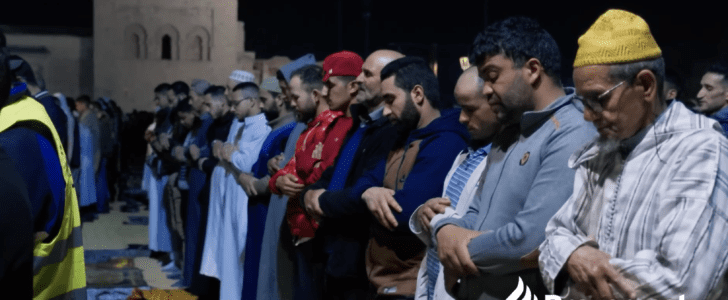
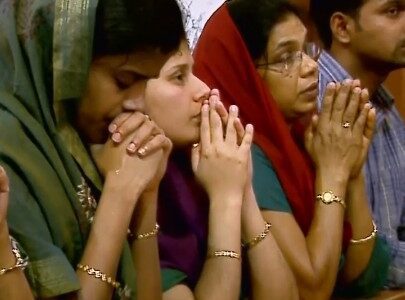
While Bahrain is a Muslim-majority country, it has shown more openness to other religions compared to many of its neighbors. Nearly all Bahraini citizens follow Islam, mostly Shia, while the ruling family is Sunni. Christianity, Hinduism, and Judaism are practiced by small communities, mostly made up of expatriates. Christians make up around 8–12% of the population, with Filipinos forming a large part of this group. Although public evangelism is not allowed and locals converting to Christianity can face persecution, Christians are permitted to worship in recognized church buildings. A major sign of this religious openness was the opening of the Cathedral of Our Lady of Arabia in 2021—a church that seats over 2,000 and now serves Catholics across the Gulf.

Bahrain still faces many challenges. Political unrest that started during the Arab Spring protests in 2011 left lasting tensions, especially between the Shia majority and the Sunni ruling class. Bahraini converts to Christianity can suffer serious consequences like job loss, family rejection, and legal troubles. Public expressions of non-Islamic faith are limited, and access to Bibles is mostly through churches or online. Still, in quiet and private spaces, small groups of believers meet, and Christian communities—especially among Filipino workers—continue to live out their faith with quiet strength and resilience.

Yet there is hope for the future. The younger generation in Bahrain is well-educated, connected to the world, and open to new ideas. These young people may help shape a future where freedom of faith and deeper understanding between communities become more common. The presence of the U.S. Navy’s Fifth Fleet and Bahrain’s strong ties with Western countries also play a role in encouraging openness and stability. Despite the struggles, the Church in Bahrain continues to be a light in the darkness—praying, loving, and standing strong in a place where faith is quietly but powerfully alive.
Lets pray.
Saudi Arabia

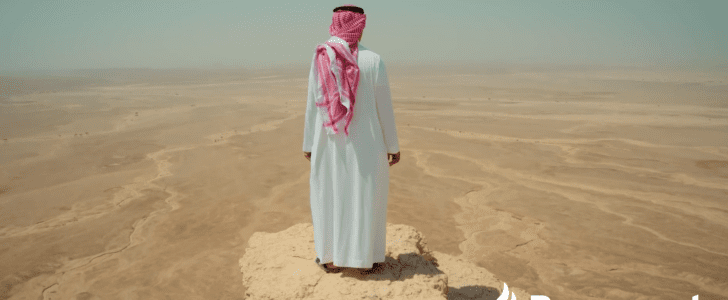
Known for its vast desert landscapes, Saudi Arabia also boasts beautiful coastlines along the Red Sea and Persian Gulf. This arid land is the birthplace of one of the fastest growing – and second largest – religions in the world: Islam. In place of a constitution, the nation abides by the laws of the Quran. The cities of Mecca and Medina are sacred destinations, drawing Muslims from around the world. The Hajj pilgrimage brings millions to Mecca every year! The nation’s Islamic heritage, located at the center of ancient trade routes, and Bedouin traditions help form its rich cultural identity. About 16% of the world’s proven oil can be found here, adding to its great global significance.

Saudi Arabia has one of the world’s worst religious freedom and human rights records. Freedoms of speech, press, and worship are virtually nonexistent. King Abdullah (1995-2015) worked to modernize the nation through social and economic initiatives. Elections were first held in 2005. And in 2015, women were allowed to vote – with some winning seats on municipal councils. Salman bin Abdulaziz Al Saud became king in 2015 and named his son, Prince Mohammad bin Salman, the Crown Prince. Vowing to leave behind “extremist ideologies” for a “more moderate Islam,” the Crown Prince has worked to give women a bit more freedom while purging political and business corruption. The nation is even opening its doors to tourism and cinemas – both unthinkable a few years ago. Even so, Saudi Arabia continues to invest billions of dollars exporting Wahhabi Islam, a fundamentalist sect that produces many extremists. Additionally, strict laws against male and female interactions have led many to secret lives of homosexuality, the penalty of which is imprisonment and death. As the country becomes more dependent on oil, the gap between rich and poor grows. This nation is also heavily involved in multiple proxy wars that are destabilizing the region (i.e., Yemen, Syria, Libya, and Iraq).

Saudi Arabia is the epicenter of Islam and one of the world’s most oppressive nations. Most Saudis are Wahhabi Sunnis, following a strict and literal interpretation of the Quran. People of other faiths are forbidden to practice openly, and most Christians are migrants. Strict religious laws make it extremely difficult for believers to practice their faith. Christian expatriates are heavily monitored by government authorities, and Saudis who follow Jesus face discrimination, imprisonment, abuse, and even death. Though numbers are unreliable, the secret Church is growing, and believers are present in every city.

Israel/Palestinian crisis

The Middle East is home to a rich and intricate tapestry of shared heritage and historical ties, underscoring the complexity of its longstanding conflicts. Despite the enduring tensions between Jewish and Palestinian communities, both trace their ancestry to a common patriarch, Abraham, This strategic region is the birthplace of the world’s three major monotheistic religions: Judaism, Christianity, and Islam. Similarly, Lebanon and Israel share ancient border connections, shaped by centuries of cultural and historical ties, which highlight the region’s past and even present disputes.
The territorial disagreements over the boundaries of a potential Palestinian state remain a core issue, with Israel emphasizing the need to maintain control over critical areas such as Jerusalem and the Jordan Valley for security and historical reasons. At the same time, Israel’s continued expansion of settlements in the West Bank and East Jerusalem is widely viewed as a significant barrier to peace, as it undermines the feasibility of establishing a contiguous and sovereign Palestinian state. Adding to the complexity, Israel faces ongoing security concerns, particularly due to conflicts with Hamas in Gaza and the presence of extremist groups in the region, which further complicate efforts toward a resolution.
The Israeli-Palestinian conflict has led to the displacement of countless Palestinians, particularly during the 1948 war, with many refugees and their descendants still living in exile. Palestinians assert their right of return, a demand that Israel views with concern due to its potential demographic and political implications. Central to this conflict is the status of Jerusalem, a city of profound historical and religious significance, with both Israelis and Palestinians claiming it as their capital, which one of the most challenging obstacles to achieving a lasting peace
On October 7, 2023, Hamas launched a deadly attack on Israeli territory, prompting the Israel Defense Forces (IDF) to respond with extensive aerial campaigns and ground operations in the Gaza Strip. Efforts by Israel to secure the release of over 100 foreign hostages taken by Hamas have largely been unsuccessful, contributing to ongoing bombardments in the region. As a result, nearly two million Gazans—accounting for over 85% of the population—have been displaced since the conflict began.
Recent casualty estimates from the Hamas-run Gazan Health Ministry report the death toll in Gaza at approximately 42,000, though these figures are difficult to verify due to limited international access to the area.
Meanwhile, negotiations for a ceasefire and a potential hostage release deal have made little progress.
The conflict has heightened regional tensions across the Middle East, drawing in various actors and escalating instability. Hezbollah fighters in Lebanon have engaged in cross-border clashes with the Israel Defense Forces (IDF), while Yemen’s Houthi rebels have launched missiles at Israel and targeted commercial vessels in the Red Sea. Meanwhile, Iran-backed groups have carried out numerous attacks on U.S. military positions in Iraq and Syria, further complicating the regional landscape.
As the violence persists, many lives are lost continually on a daily bases, and countless individuals are living in fear, grappling with the erosion of hope for reconciliation. The ongoing bombardments and lack of progress toward peace underscore the immense human toll of the conflict, leaving the prospect of resolution increasingly uncertain.

Sudan

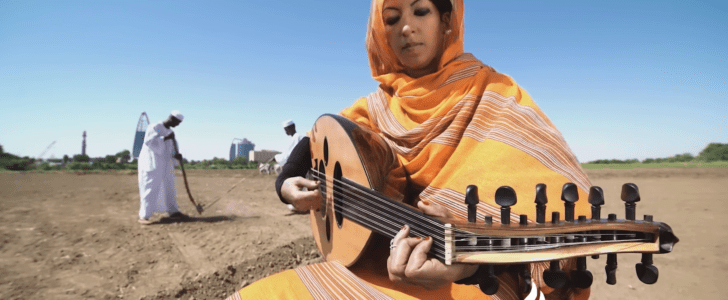
The Sudanese people are known for their extraordinary diversity, rooted in a shared cultural heritage and a history spanning millennia. The country’s rich cultural landscape is shaped by a variety of ethnic, linguistic, and religious communities, playing significant roles in enriching their identity and customs. The Sudanese cultural wealth is evident in their historical landmarks, such as the ancient pyramids of Meroë, alongside vibrant oral traditions as well as abundance of natural resources.
However, this diversity has not been without challenges. Tensions have arisen as various groups strive for recognition and equality, highlighting the complexities of Sudan’s socio-political dynamics. Despite these difficulties, the Sudanese people’s resilience and creativity shine through reflecting an enduring sense of unity and pride in their heritage.

Sudan has been plagued by decades of authoritarian military rule and chronic political instability, sparking widespread protests as demonstrators demanding a transition to democratic governance and an end to military domination. In April of 2023 a violent power struggle between the Sudanese Armed Forces (SAF) and the Rapid Support Forces (RSF) broke out conflict which has wreaked havoc across the country, triggering a profound humanitarian emergency. Cities such as Khartoum and Darfur have been especially hard hit, with reports of large-scale atrocities, escalating ethnic violence, and widespread displacement. An estimated 11 million people have been forced from their homes, seeking safety within Sudan or in neighboring nations like Chad and Egypt.

The Sudan conflict has hit a dead end, efforts to reach a political settlement have been unsuccessful, with both sides entrenched in their positions, perpetuating the crisis and shielding those responsible for atrocities from accountability. The war has devastated Sudan’s economy, and essential services have crumbled, leaving hospitals non-operational and severely limiting access to healthcare. Food insecurity has soared to critical levels, affecting over half the population. Inflation, surging food prices, and widespread infrastructure damage have reversed decades of economic progress. While humanitarian aid is desperately needed, The Sudan conflict has been further compounded by the seemly inaction and lack of engagement by the international organizations, despite widespread human rights abuses and a rapidly deteriorating humanitarian situation, the world seems to be looking the other way leaving the Sudanese people to bear the brunt of this protracted conflict.

Sudan’s spiritual landscape reflects the true nature of its complexities. The country is predominantly Islamic, but it also includes Christian and indigenous spiritual communities. Official estimates place the Christian population at around 5.4%, though some advocacy groups suggest the actual figure may be higher. The ongoing conflict has taken a heavy toll on faith communities, disrupting worship, dismantling social support networks, and hindering humanitarian efforts. Amidst these obstacles, the church and some faith base organizations serve as essential hubs, providing not only spiritual support but also food, shelter, and a sense of belonging to those displaced by violence.

Yemen

Yemen, once known as Arabia Felix or the Happyland, was a land blessed with abundant
and prosperity.
Its fertile regions and majestic mountain ranges thrive with rain and agriculture, even
giving birth to the Tem Cafe Mocha, through its thriving coffee trade in Mocha town.
However, the present reality paint a grim picture of this nation, as Yemen has tragically
become the poorest Arab nation and faces the most significant humanitarian crisis inthe world. The legacy of war and instability has left this nation shattered, crippled by social, political and economic turmoil. In the midst of this chaos, it is the innocent civilians who bear the heaviest burdens of violence and suffering caused by their ongoing civil war since 2015.
Shockingly, over 80% of the population is in desperate need of humanitarian aid, with
half of them being children.

Yemen’s famine crisis stands among the worst in the world, with limited access to functioning
hospitals, scarcity of medications and a dialogue of clean water.
Preventable diseases have ruthlessly claimed thousands of lives in this devastated land.
As if that were not enough, a catastrophic cholera outbreak, with approximately one million
cases, continue to ravage the population.
The scarcity of water worsens with a widespread consumption of quartz, the nation’s most popular narcotic, demanding a staggering 40% of the already limited water supply.
Amid this turmoil, terrorist and militant groups such as Al Qaeda, Islamic State and
the Houthis, exploit the chaos and human suffering to gain power and territory.
Nevertheless, amid the darkness that engulfs Yemen, a more profound concern emerges.
It remains one of the least evangelized nations on Earth.
A tiny fraction, a mere 0.2% of the population knows and follows Christ, while there overwhelming majority, 99.7% adheres to the Islamic faith.

The persecution suffered by Yemen’s small community of believers, ranks among the worst
in the world, as they face horrifying treatment for their faith in Christ.
Most of these believers are faith-generation followers, while many espatriots or migrant
Christians have been forced to flee due to the relentless war and violence.
Those who remain among the few followers of Christ have typically converted from Islam
and living constant fear of discovery, facing banishment from their tribes, or even
meticulous execution.
Furthermore, evangelism itself is outlawed, espousing those brave enough to share their
faith to the risk of death.
Despite this seemingly insurmountable obstacle, the Church in Yemen, pacifiers, finding ways
to connect through social media and secret gatherings.
The faith continues to grow amidst adversity, miraculously drawing more people to embrace
the hope found in Christ than ever before.

Tunisia

The flag of the Tunisian Republic is dyed in red, symbolizing the bloodshed by martyrs in the ongoing struggle against oppression, a battle that Christians in this northern African nation continue to face today. For a long time, Tunisia has been seen as a country with limited religious freedom, where the spreading of the Gospel is not allowed and the government leans towards Islam. In 2010, a fruit vendor named Mohamed Bouazizi protested his lack of opportunities in this repressive nation by immolating himself, sparking what became known as the Jasmine Revolution. This revolution led to the downfall of the authoritarian president. Subsequently, the first free election took place in October 2011, resulting in the Islamic party Ennahda coming into power. This shift has left many feeling uneasy, as Islam’s role in public life becomes increasingly prominent.

When political turmoil struck Tunisia in 2011, the national economy suffered a severe blow, resulting in high levels of unemployment in certain regions of the country. The new government was left with the immense challenge of stabilizing the shattered economy. As a consequence of the revolution and the subsequent change in government, there has been a relaxation of press restrictions. Media companies now enjoy greater autonomy, no longer tightly controlled by the government. While Tunisian women have always possessed more rights compared to other Muslim nations – with polygamy being illegal, for instance – divorce and abuse still persist in society.

Tunisia is home to an estimated 13,000 Christians, amounting to barely a quarter of a percent of the population, and the majority of them are non-Tunisian. Due to geographical distances, almost one-third of these believers do not have the opportunity to gather and worship together. Christians face persecution from their families, friends, and even from authorities, with following Jesus jeopardizing their employment, social standing, and personal safety. Since the revolution, persecution has intensified, forcing several church leaders to flee the country due to threats. The absence of these leaders has made evangelism and discipleship increasingly challenging. Out of the 23 different people groups residing in Tunisia, 14 have never been exposed to the Good News. While openly distributing Christian literature remains prohibited, the loosening of press restrictions has fostered the growth of Christian media.

Niger

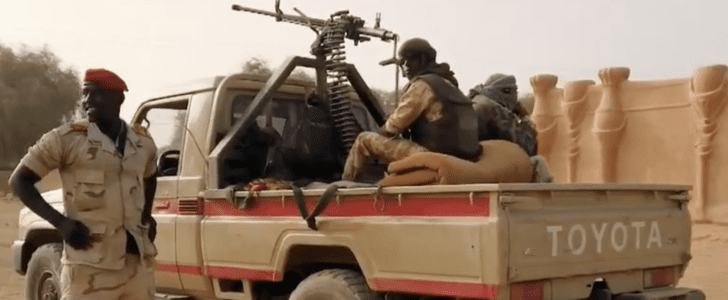
The landlocked country of Niger in North Africa is characterized by its expanse of sand dunes and desert plains. After enduring a period of military rule lasting for thirty-one years, marked by violent coups and bloody political infighting, Niger transitioned into a fledgling democracy a decade ago, albeit facing a recurring political crisis in 2023. Despite being home to one of the world’s richest deposits of uranium, Niger has shifted its focus toward agricultural development and livestock breeding. Furthermore, it holds the prospect of future economic growth through the mining of valuable resources like gold, coal, and recently discovered oil reserves.

One of the poorest countries in the world, Niger has over 3 million people in acute food insecurity. The agricultural economy is frequently destroyed by drought, making it insufficient to support the growing population. Despite government efforts to increase agricultural production and the development of uranium mining, the gross national product has declined sharply. Now with the recent 2023 coup, that number will go up with food aid trapped at the border. Slavery is still practiced in isolated areas of the country. Children are trafficked for work at gold mines, Sexual exploitation, and begging. Women get kidnapped and forced into servitude or prostitution, and boys are taken for labor in stone quarries. A land dispute between Libya remains unresolved and often triggers acts of violence.

Less than two percent of the population claims the Christian faith. Ninety-three percent of the nation is Muslim, with seventy-eight percent of the people listed as unreached ethnic groups. Christianity is slowly growing through humanitarian efforts such as well-digging, agricultural development, and education. The number of Evangelicals triples every year, though that is not keeping up with population growth. The cultural pressure to maintain the Islamic faith continues to hinder outreach efforts, though indigenous pastors, many of whom have converted to Christianity from Islam themselves, are stepping up as leaders in the fledgling church.

Kenya

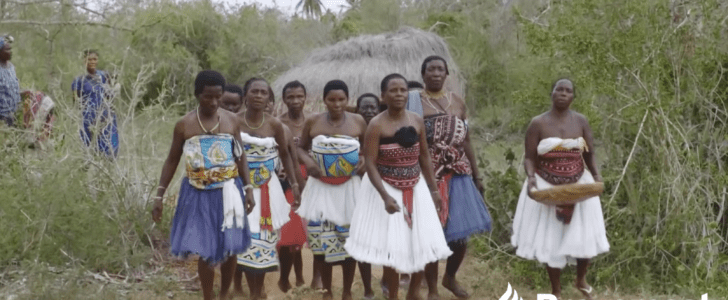
Kenya, a country often described as a microcosm of Africa, is blessed with a diverse landscape that showcases the stunning beauty of fertile plateaus, majestic mountains, untamed deserts, lush rainforests, and breathtaking beaches along the Indian Ocean. This nation, the eighth largest in Africa, boasts a rich tapestry of cultures, encompassing over forty different ethnic groups, including the Bantu, Nilotic, and Cushitic peoples.
Surrounded by Somalia, Ethiopia, Sudan, Uganda, and Tanzania, Kenya prides itself in maintaining strong and mutually beneficial relationships with its neighboring countries. It stands as a bustling center of transportation, commerce, and finance within the region. Furthermore, Kenya’s national parks entice adventurous souls from all corners of the globe, beckoning them to experience the wonders of safari tourism firsthand.
Having gained its independence from British colonial rule in 1963, Kenya embraced a path of moderation and embarked on a journey towards stability and prosperity in East Africa. However, recent times have brought forth challenges in the form of corruption and political changes, testing the nation’s resilience. Sadly, nearly eighty percent of the Kenyan population resides in rural areas, heavily relying on agriculture for their livelihoods. This, coupled with environmental issues, high birth rates, corruption, high unemployment rates, and the daunting reality of 1.5 million individuals living with HIV/AIDS, perpetuates the cycle of poverty for half of Kenya’s 53 million citizens. Although the government has devised strategies to address these multifaceted challenges and more in its Vision 2030 plan, the absence of robust social welfare programs amplifies the hardships faced by those in need.
Embodied by the profound faith held by almost fifty percent of the population, Kenyan Christians continuously strive to spread the gospel and bring the light of God to all corners of the earth. Church planting and missionary endeavors are fervently pursued, transcending denominational boundaries. All sectors of the Christian community, be it traditional or newly established, bear witness to considerable growth and expansion. However, amidst these triumphs, Kenyan churches grapple with the challenges of nominalism, the blending of ethnic cultural practices with biblical truths, and the pressing need for capable and trained leaders in the vast expanse of their 80,000 congregations. Meanwhile, Islam and traditional tribal religions account for the majority of the remaining seventeen percent of the population. Kenya, a land of immense spiritual dynamism, and continues to attract many regional and continental mission organizations

Morocco

Yemen, a country with roots stretching back to ancient times, is renowned for its profound religious history and cultural significance. Known in Islamic tradition as the land of wisdom and faith, Yemen is home to a people who have long been admired for their devotion to Allah and the teachings of the Prophet Muhammad (peace be upon him). The Prophet himself praised the people of Yemen, saying, “Faith is Yemeni, and wisdom is Yemeni.” This heritage resonates through the country’s mosques, educational institutions, and the lives of its devout population.
Yemen embraced Islam during the lifetime of the Prophet Muhammad, making it one of the earliest regions to adopt the faith. The country became a center for Islamic learning and scholarship, with cities like Sana’a and Tarim gaining fame for their contributions to religious knowledge. Tarim, often referred to as the “City of Scholars,” is known for its madrasas and centuries-old manuscripts that preserve the Islamic legacy. This spiritual richness continues to shape Yemeni society, deeply influencing daily life, customs, and traditions.
Beyond its Islamic significance, Yemen’s religious history is intertwined with stories from the Quran and earlier scriptures. It is mentioned as the home of the people of Saba, famed for their Queen of Sheba, and the site of historical events that demonstrate the might and mercy of Allah. Today, Yemen remains a source of inspiration, reminding believers of the importance of faith, patience, and perseverance amidst challenges. Its people, despite enduring trials, exemplify resilience and reliance on the divine, a testament to their unshakable spiritual foundation.